


Berrydale Tree Farm


Berrydale Tree Farm is exactly what it sounds like! An old tree farm!
This project site was an old Christmas tree farm from 1901 to around 1970, made of mainly Douglas Fir trees. These tree were planted close together for maximum coverage, but when it no longer was operational the trees still kept growing! Now some odd years later the trees are now 20ft tall and far too close together making a dense monoculture of Douglas Fir.
Why not just leave the trees alone? Isn’t it good the trees are there?
Yes, and….
This site is very special in that it is next to a salmon bearing creek. While it is wonderful to have such mature Douglas Fir, that is the only thing that is there! In order to have a functioning ecosystem, more than one type of plant needs to inhabit the area to accommodate everyone who wants to live there!
So we have partnered with the Orca Conservancy to change that! We have installed around 700 plants of diverse species specially picked to encourage wildlife habitat, pollination, and food for our Chinook salmon!
We have hosted countless community work parties to plant, remove invasive species, and thin out the Douglas Firs here at Berrydale Tree Farm.
Our plan for this site is to reintroduce native and culturally significant species to help rebuild complexity into this location. Having only one species leaves the forest at risk for things like disease, fire, and poor genetic diversity. The Douglas Firs being so close together makes it extremely easy for pests like insects and fungus to transfer from tree to tree when the limbs are touching each other. In fact, before limbing and culling trees, almost no wildlife on land was able to walk through to get to the river. Now that we have raised the canopy and removed some trees, the site it teaming with life like elk, coyotes, birds and amphibians.

March 7th 2026: First Planting of the year
Our first planting of the year was a great success. This morning was cool and grey, perfect for planting! With 500 plants staged we got started right away and churned through around 100 plants!
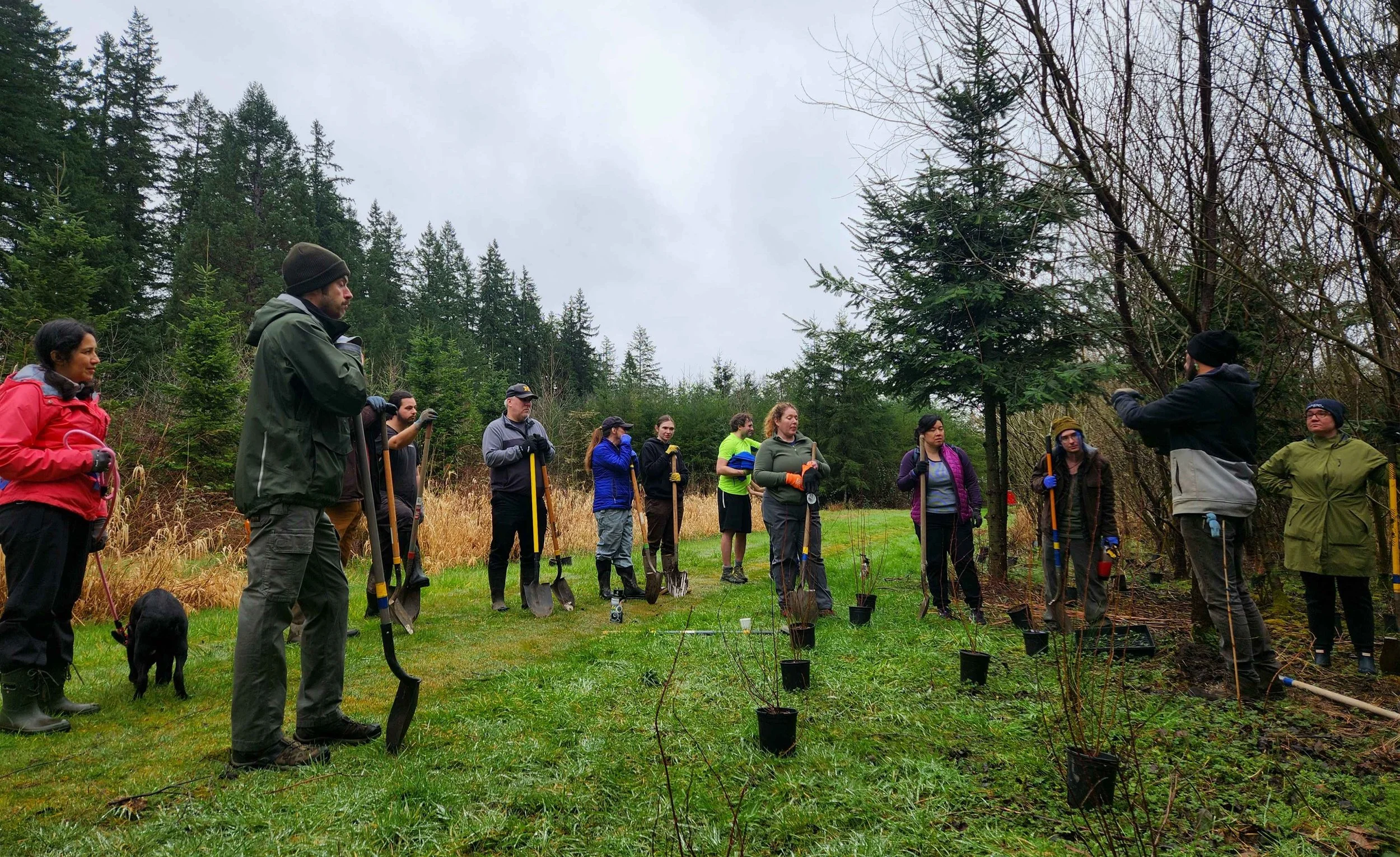
Staff botanist Zach, doing a planting demonstration.
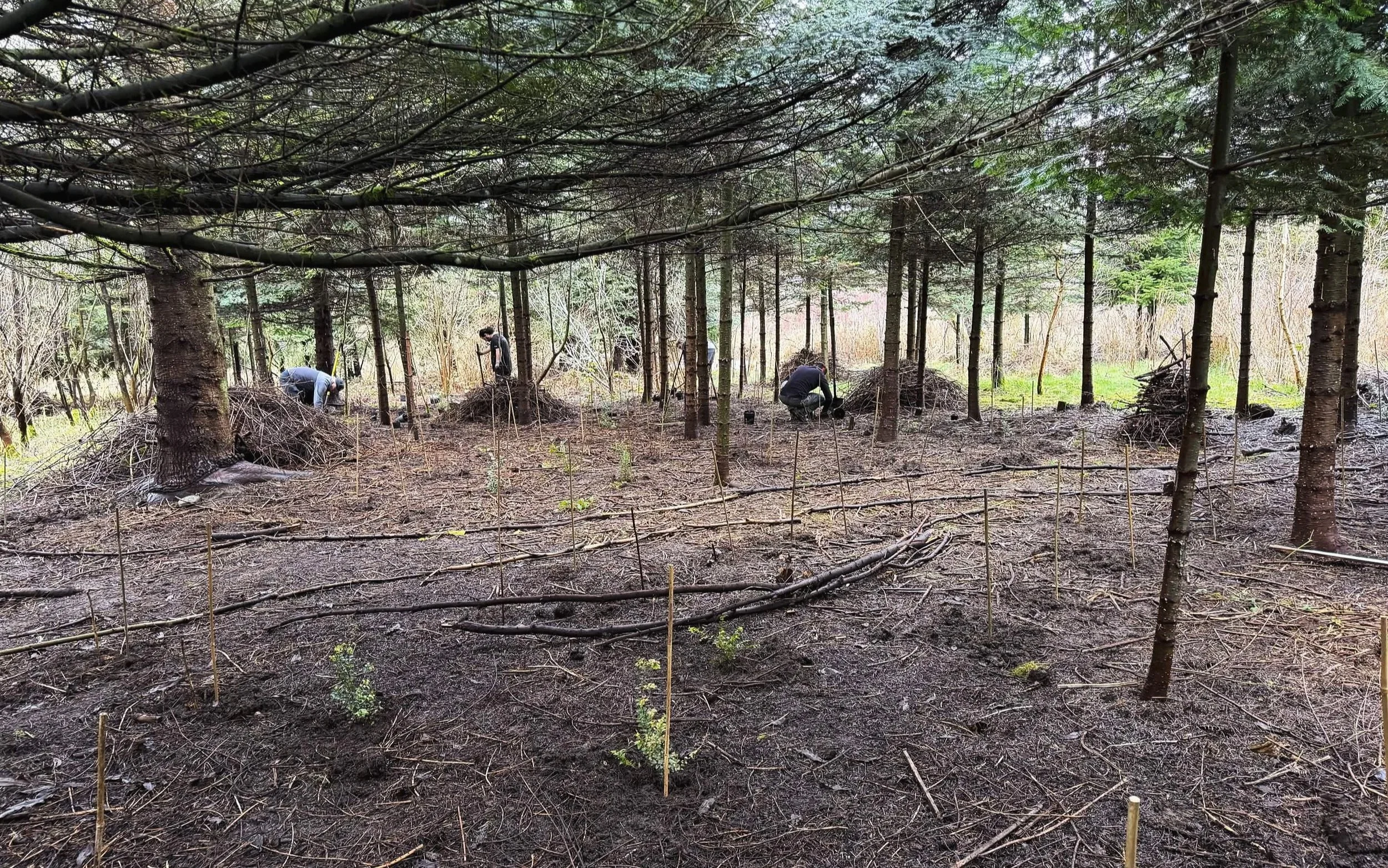
Plant selection includes:
Pacific Willow
Red Osier Dogwood
Osoberry
Salmonberry
Thimbleberry
Oak Fern
Fringe cups
Woodland strawberry
Evergreen Huckleberry
These species chosen are all PNW native species, and chosen for their adaptability to saturated wet soils and shade tolerance.
26 April 2025:
Earth Week!

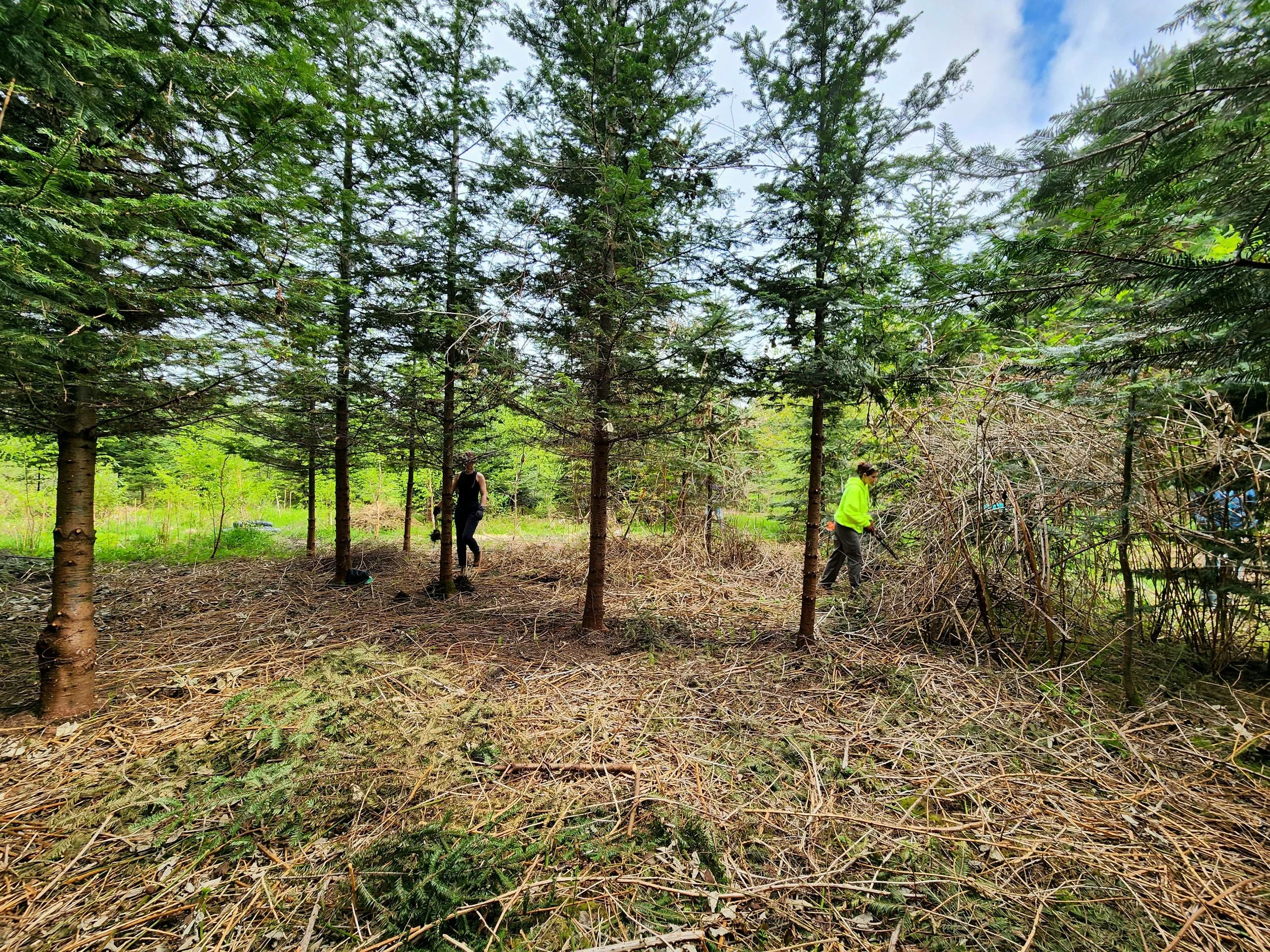
On this lovely Earth Day weekend we had over 20 volunteers come to help tackle the blackberry taking over!
We partnered with the Orca Conservancy as well as Women in Environment, a nonprofit dedicated to professional development and community building for women in the environmental field!



8 March 2025: 128 Trees for L128

On March 8th, 2025. Volunteers gathered in honor of the late Resident Killer Whale calf known as L128. A donation campaign was initiated by the Orca Conservancy with the goal to raise enough funds for 128 plants in her name, but the love and support from the community swept in and raised over double the needed amount to 400!
“By restoring and planting trees and shrubs in key watersheds, we enhance riparian forests that provide essential habitat for salmon, which are a crucial food source for Southern Resident killer whales. These healthy ecosystems prevent riverbank erosion, regulate water temperatures favorable for juvenile salmon, and support insect populations that serve as vital prey during the salmon's early life stages, ultimately improving the overall health of the aquatic ecosystem.”
—Orca Conservancy
How does a tree honor L128?


With the help of around 30 volunteers we planted 300 plants in just a few hours!
We planted:
Red elderberry
Twinberry
Oceanspray
Buffaloberry
Salmonberry
Osoberry
Big Leaf Maple
